Uncategorized

Beef, It’s What’s For Dinner

I think we all know how expensive groceries are getting these days. Something we decided to do was purchase half of a cow and split it between me and my husband and my mom and dad. This was a little cheaper per pound than what you can get at the grocery store and we knew exactly where it came from and where it was processed. We were able to get very lean beef in a variety of cuts and also support our local rancher.

When you purchase a cow you have to have it processed by a butcher. You will receive ground beef, steaks, cube steak, stew meat, ribs, roasts and brisket. You will need to have a large freezer to keep all of the meat. When you get the meat it is a good idea to organize the different cuts so it is easy to just go to the freezer and grab what you need.

There are so many recipes you can make with your beef. Some of my favorites for the ground beef are spaghetti, frito chili pie, flautas, hamburgers and sloppy Joe’s. There are several crockpot recipes you can do as well. I love just throwing a roast and some potatoes in the crockpot in the morning and coming home to a ready to go meal. You can also do some short ribs in there with a few ingredients including some wine and just make some mashed potatoes and enjoy.

One of my favorite recipes to use the stew meat for is something we call meat and rice. Not a very creative name but it is so delicious. You will put your stew meat in the crockpot with a can of cream of mushroom soup, a dry onion soup packet and about a cup of water. Let it cook on low for 8 hours or on high for 6 hours. Make some rice and put it on a plate and cover with the stew meat. Super simple but oh so good!

I know it can seem overwhelming to get so much meat at once but in the end it is more cost effective and convenient when your trying to feed your family. I would highly recommend getting your beef in this way because it is really delicious and you are supporting a local rancher.

Over the next few months we will be sharing more farm to table recipes and ideas. You will get some of our most cherished canning recipes, ways to use different herbs, great flowers to grow to keep fresh flowers in the home throughout the spring and summer and much more!

-Cristie

Uncategorized

Growing a Kitchen Garden

We recently posted about purchasing half a cow and how nice it was to know where your beef had come from, the convenience of having a large stock of various cuts and the money you can save from buying in bulk. Another great project you can do to reap all of these benefits is growing a kitchen garden. This is something we do each year and I honestly wouldn’t know what to do without it.

Basically a kitchen garden is a garden specifically for eating, flavoring food and some medicinal plants. You can think of it like your grocery store and plant the amounts of different plants you will need to eat fresh and also can for the winter. There will be some food you will use more than others and some you are able to can and others you can’t.

You will first want to think what vegetables and herbs you like to eat and use the most. For our garden this year we will be growing tomatoes, jalapeños, bell peppers, poblano peppers, banana peppers, lettuce, potatoes, onions, corn, pumpkins, watermelons, raspberries and a variety of herbs. We enjoy canning pasta sauce and salsa so we grow a lot of tomatoes, peppers and onions. We also use different herbs in most of our dinner recipes.

Depending on what you choose to plant you will typically start planting in mid March and finish up sometime in May. You will need to put in a little hard work in the beginning to reap the benefits the rest of the year but it will be well worth it.

As soon as our veggies and herbs are ready to harvest we will post some yummy recipes for you to try out! Join us next week when we talk flowers to grow for your home!

Cristie

Uncategorized

Getting Organized for Your Sale!

It’s spring and we’re getting ready for the first Big Red Barn Sale of the year! Keep looking in the next month or so for details.

Although my sale is a little larger than most garage sales, these organization concepts apply to the largest and smallest sales. Organization is key to a successful sale. I pick up different crates, racks, boxes, and cartons that will hold like type items.

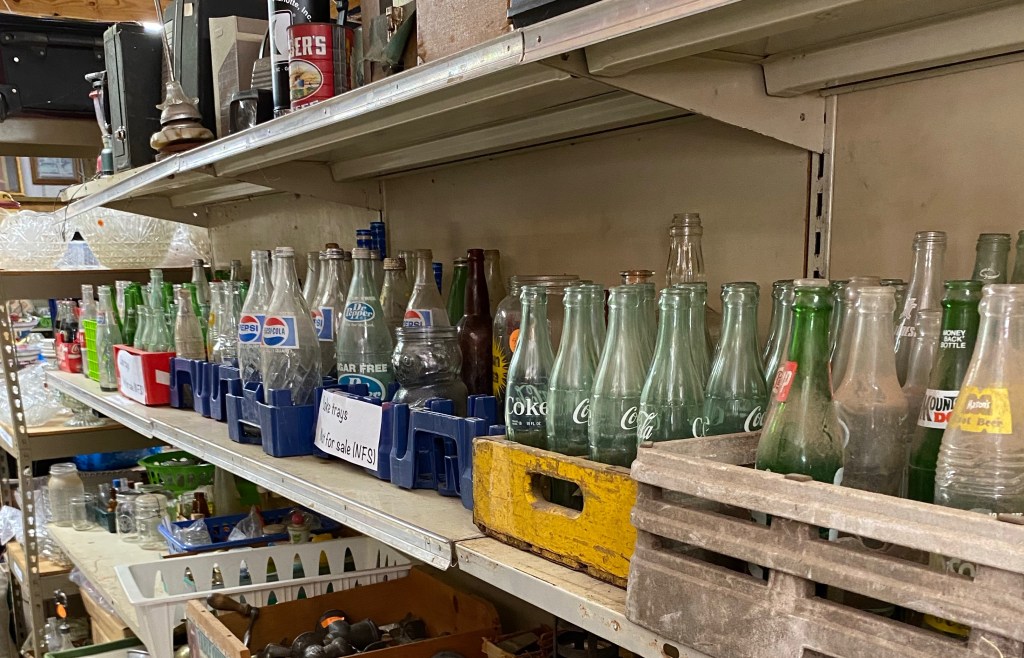
I found the blue pop crates at a big liquidation sale and keep them for every sale. We sell a lot of bottles and pop bottles, and I just refill them from sale to sale. An old bread rack is holding the cast iron. We will sometimes buy items from restaurant supply dealers, and the drinking glass racks are a hot commodity!

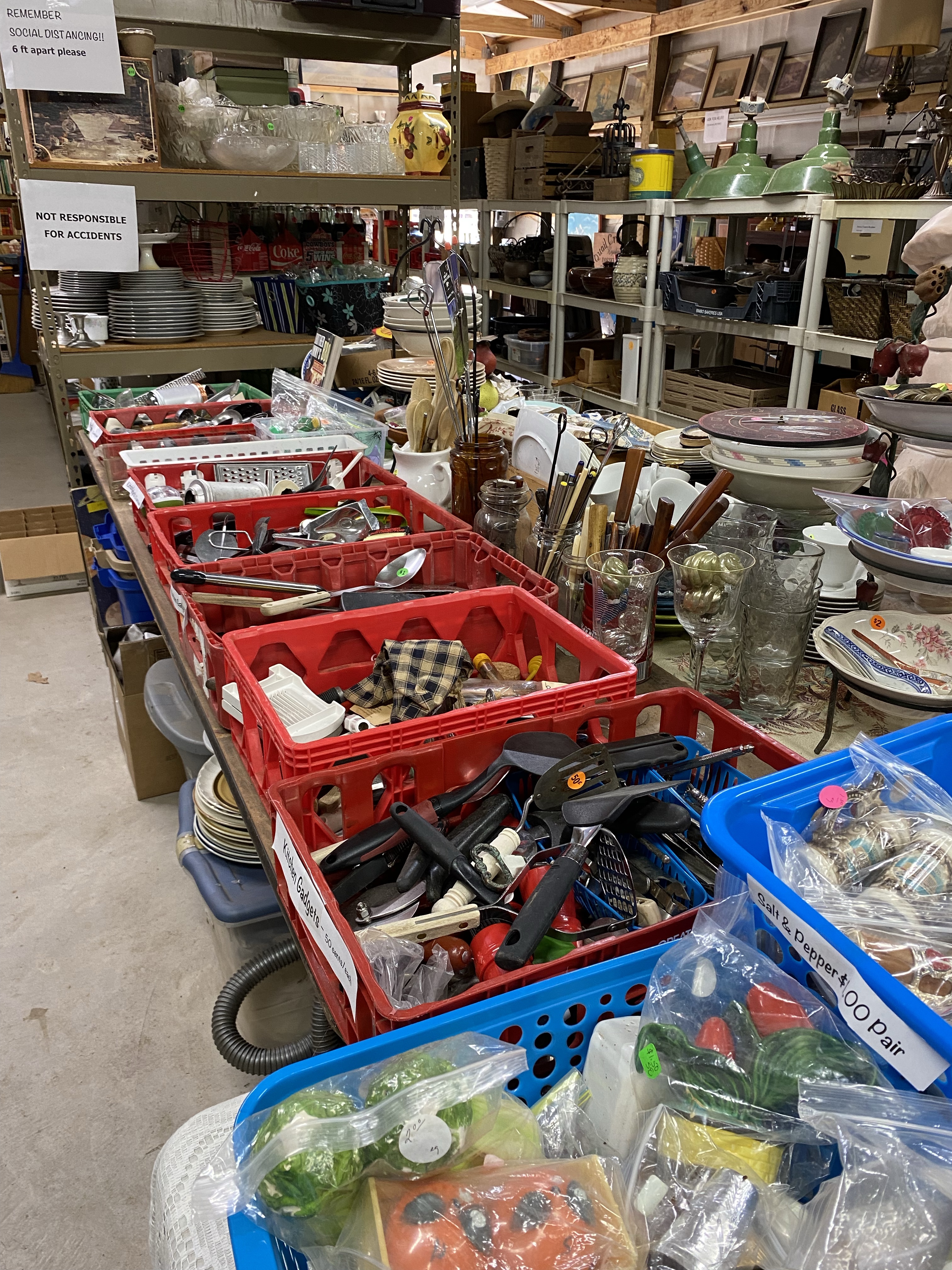
The red crates are Coke crates I picked up at a flea market in Alabama. I bought most of what he had and it took up half of my car. They are great for sorting utensils or other items. They’re also nice to use in your car, since they’re very sturdy and they don’t slide around much.

You can buy a lot of different crates at other sales. I save them and use them at sales to group similar items. It might prompt someone to buy more if they see everything together.

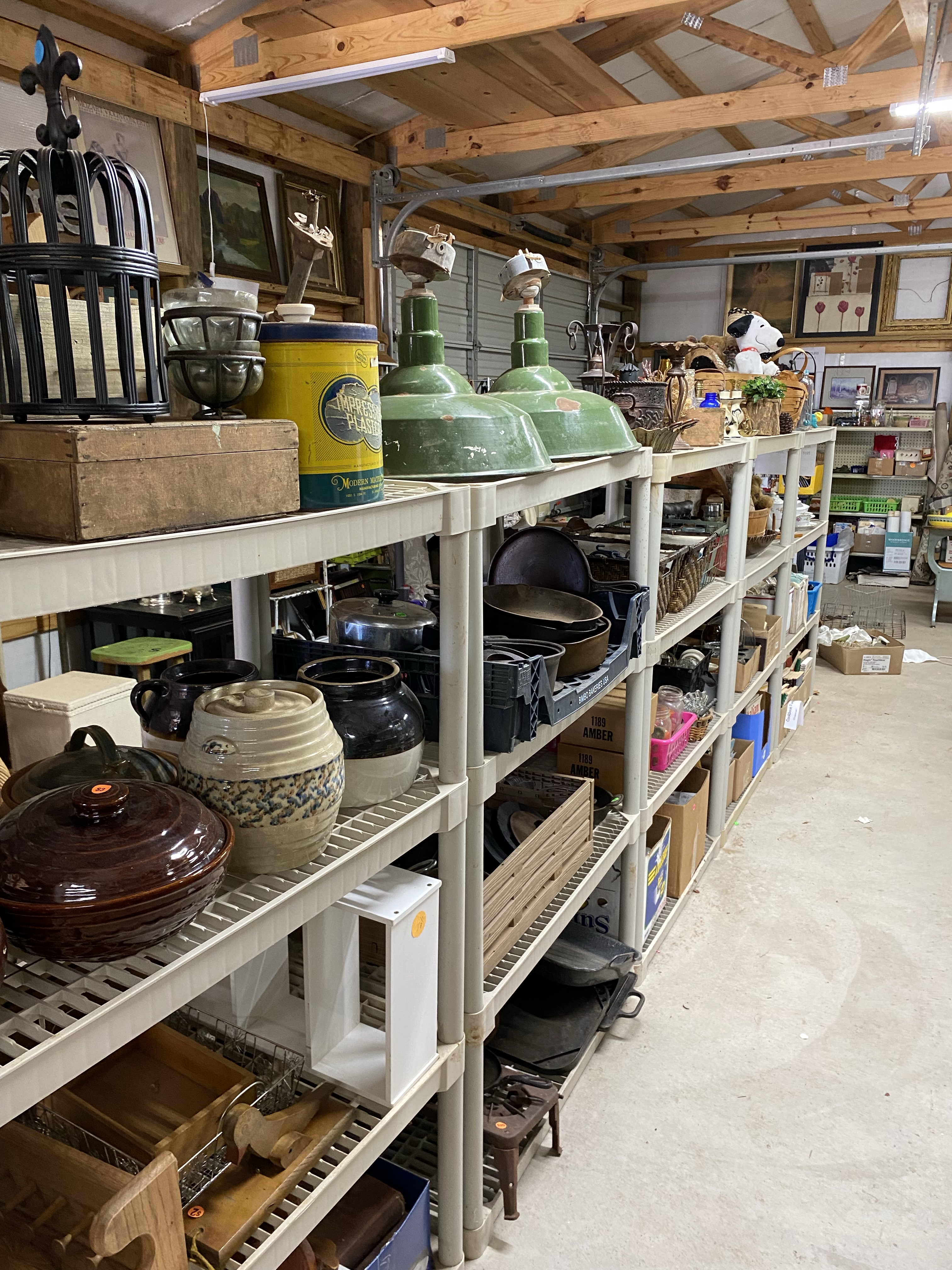
We bought the plastic shelving at another sale and it has been great for our sales. It provides a good site line through the shelf from one side to another. Again, we sort out cast iron, wooden decor, candles and holders, baskets, etc. I don’t sort everything to give a little bit of interest. But, the more organized your items are, the more people will buy.

The fruit crates are really handy and add a lot of color and interest. They’re a little harder to find, but again, when you see something you might use down the road, pick it up! I also use cardboard boxes and flats to sort glasses and dishes. I have found, when selling dishes and glass sets, people are more like to buy if they can just pick them up and go.

Hope you have a successful sale! And, hope to see you at the Big Red Barn sale this spring. Follow us on our Facebook page for sale notifications!

Jackie

Collecting

Rolling Pins – King of the Kitchen

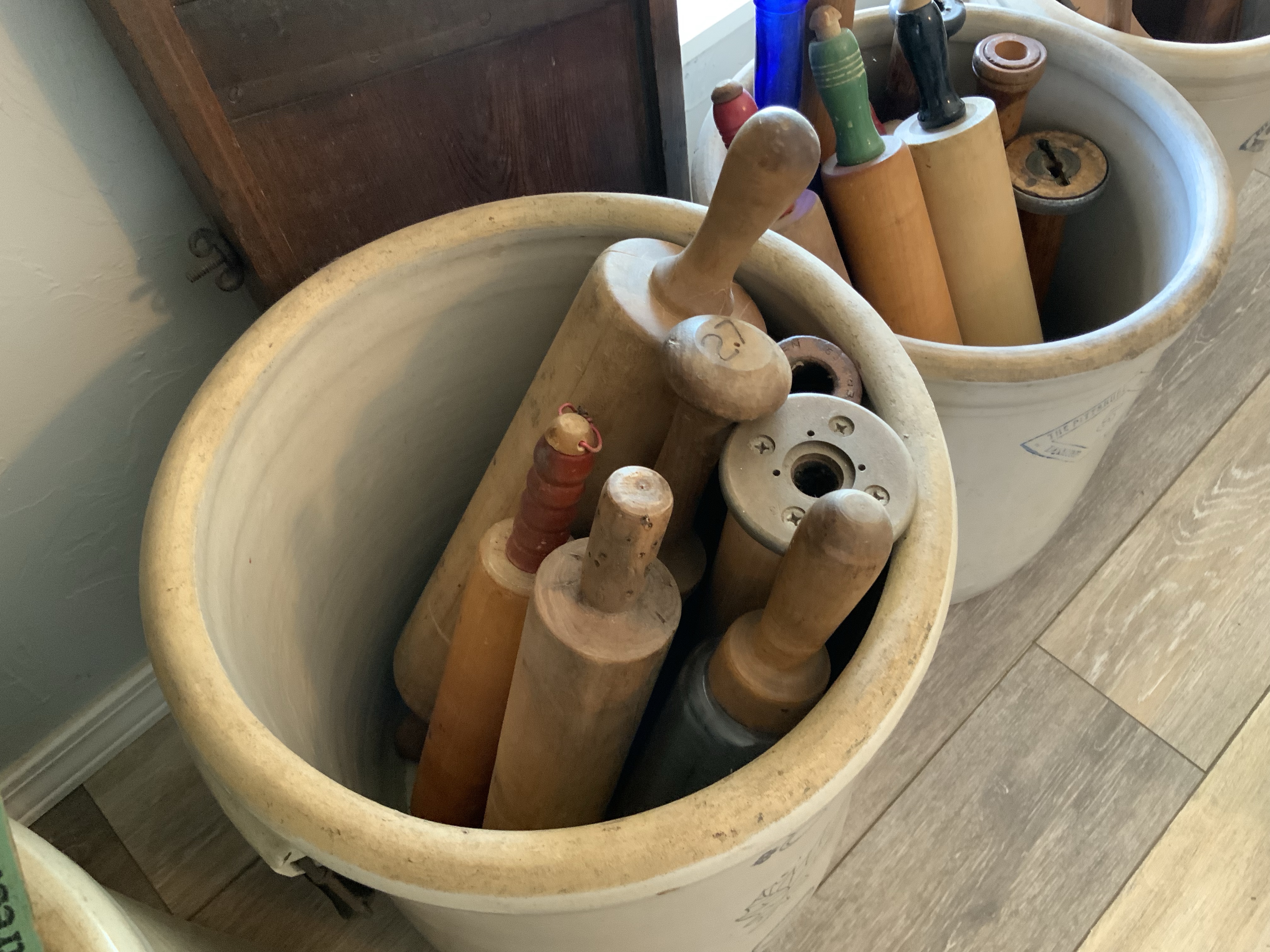
Throughout history, rolling pins have been the king of the kitchen. An early kitchen tool, these were essential for early kitchen baking and cooking. I have been collecting rolling pins for about ten years. Don’t really know how it happened, but I love when I find an unusual one at an auction or garage sale.

Early pins were carved from one piece of wood. The rolling handles came along much later, at the end of the 19th century. Of course, they are used to roll out bread, noodles, pie crust, and more. They are still manufactured today. And, they experienced a resurgence during the pandemic when home cooking and baking was more popular.

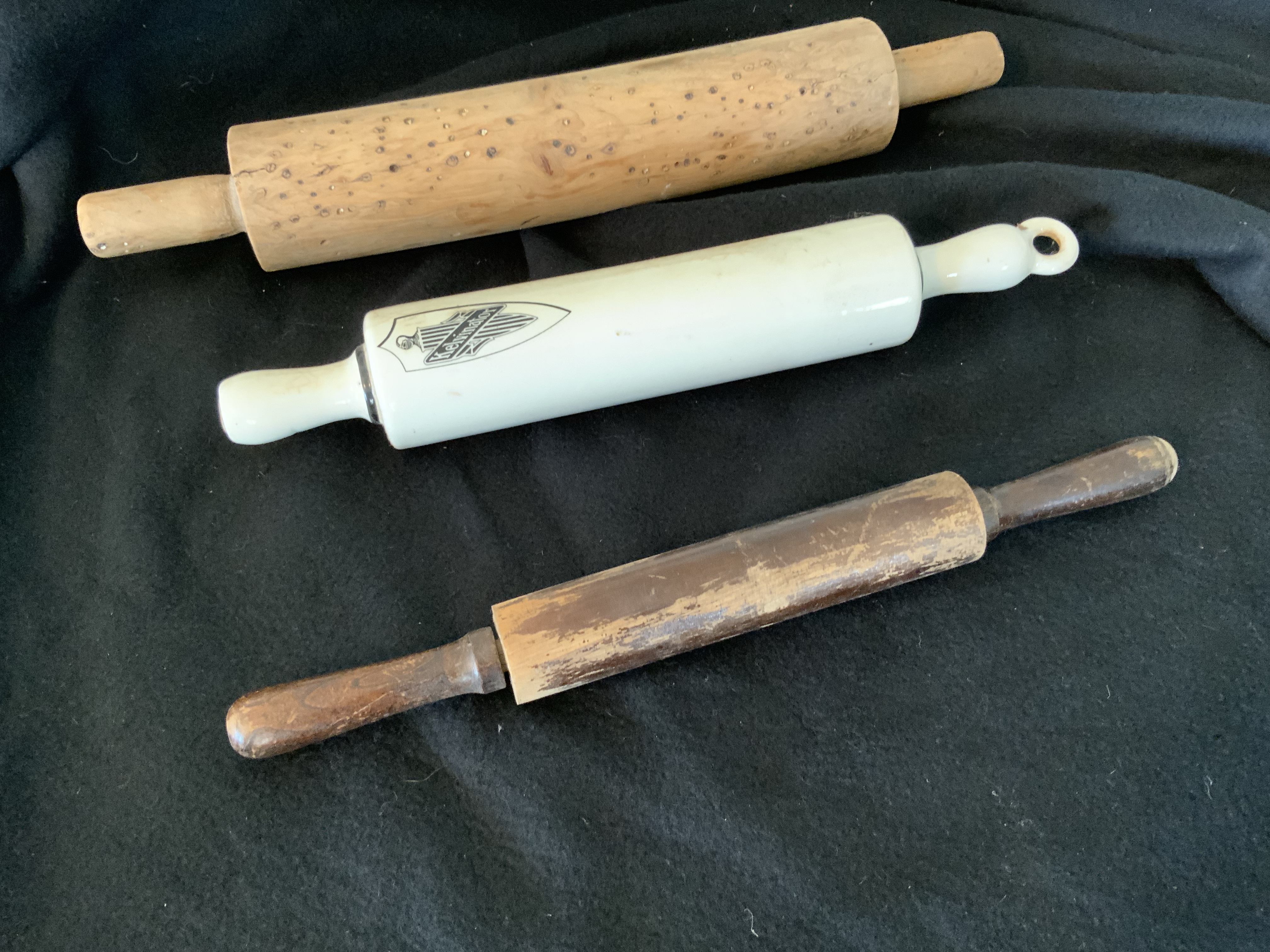
Some of the favorites!

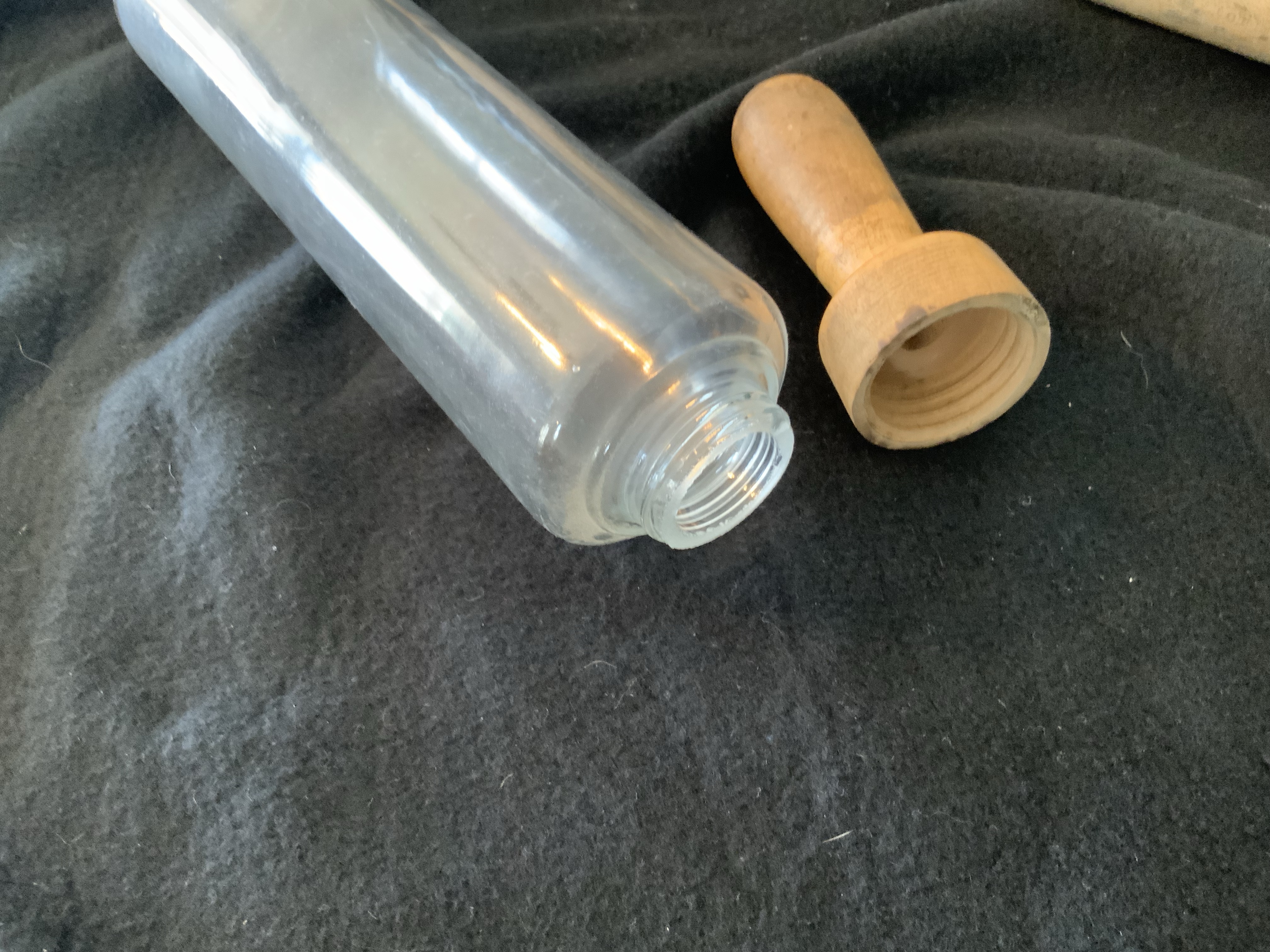
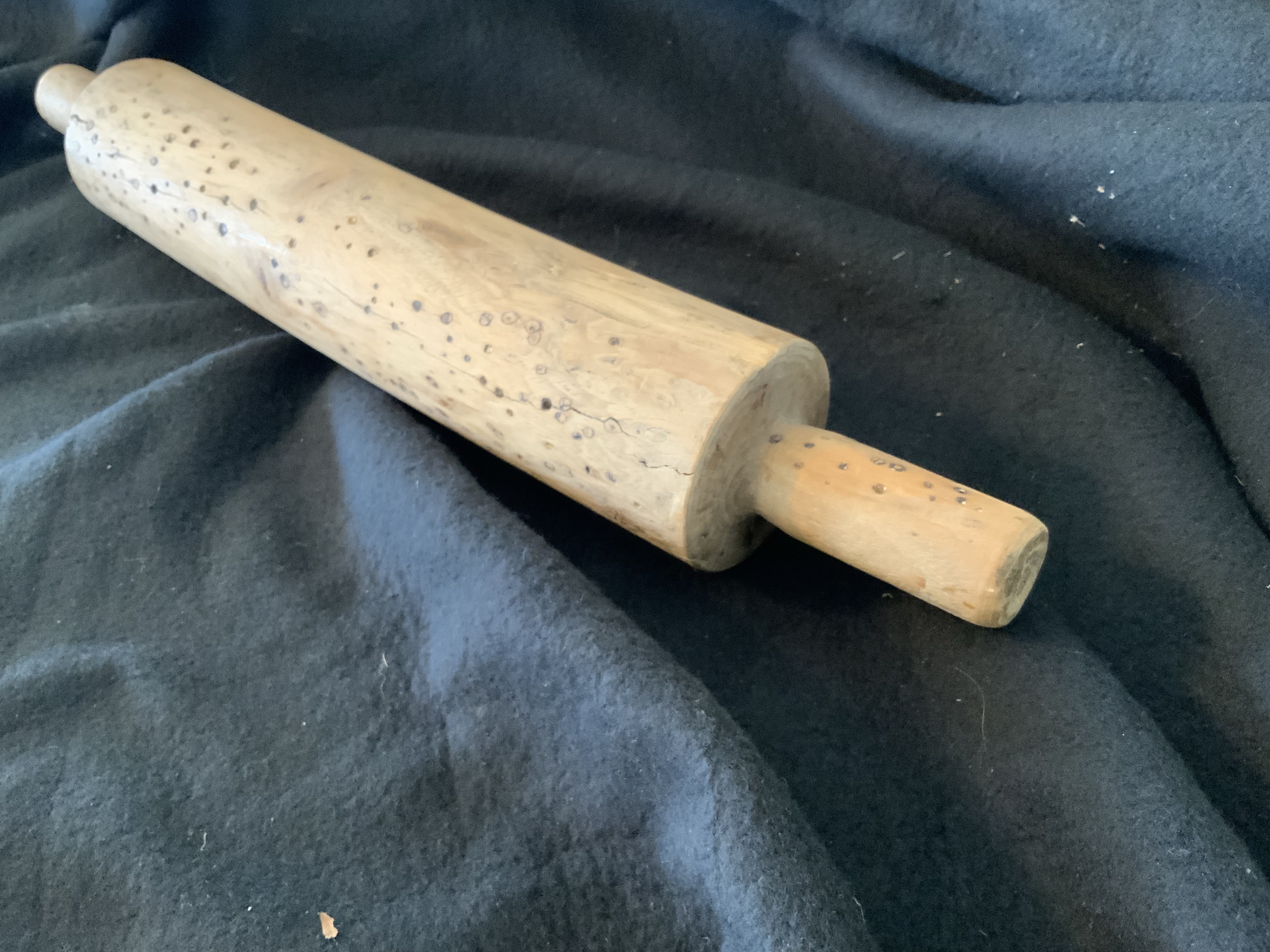
The top rolling pin is the biggest one I have. It’s huge. It was probably used in an industrial restaurant or baking establishment. The middle, glass rolling pin has wooden handles. Although you see glass rolling pins a lot, I have never seen one with wooden handles that unscrew. Warm water was placed inside the rolling pin to assist with smooth rolling. I bought the yellow handle one at a garage sale. Although it’s pretty plain, I had never seen one with yellow handles.

The top pin in this group was carved in one piece. I thought the bore holes added a lot of character to this treasure. I bought the Kelvinator at an auction about ten years ago. Kelvinator was an American appliance company selling from the early 1900s. This looks 1940s to me. I had never seen one like this before. I’m sure it was a give away with a new refrigerator or appliance. Who knows, this might have been what started the collection! The last rolling pin was probably used for smaller cookies or pie crusts. I just liked the color and the look.

Although rolling pins are easy to find, one that is unusual is generally more of a treasure hunt. After ten years, I only have twenty or so. It’s still a lot of fun!

Happy hunting! Jackie